
Free Points Hide in the Serve: the Three Spins That Beat Every Club Level
The three spin serves every club player should own — heavy backspin, forehand sidespin, and the disguised no-spin — with the mechanics and practice plan for each.
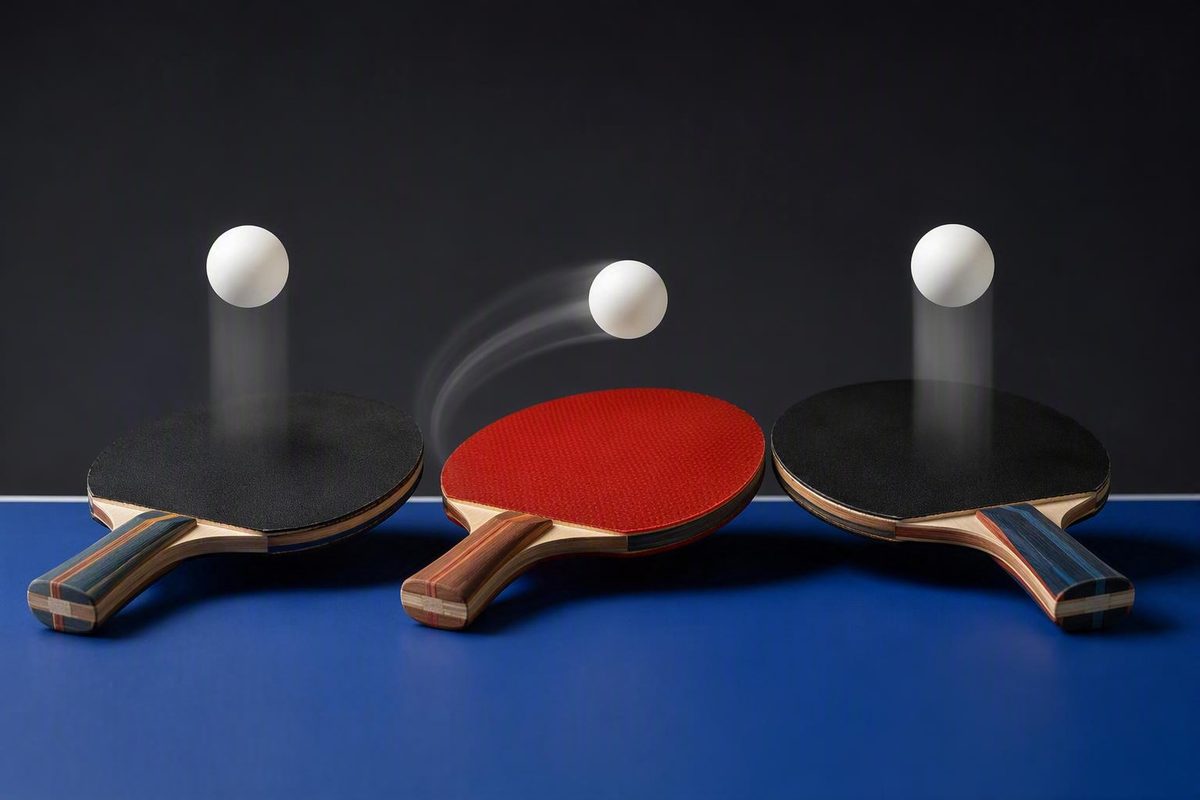
At every club level below expert, the serve is the most under-trained shot in table tennis — players who drill loops for hours serve the same friendly float they learned at fourteen. Three serves, trained deliberately, are worth a hundred rating points. Here they are, in learning order.
First: heavy backspin, short
The foundation serve. Ball tossed from an open palm, struck thin and low on its underside with a fast, loose wrist — the sensation is slicing the bottom off the ball. Done well, the ball skids low, bounces twice on the opponent’s side (the definition of “short”), and tries to die. Club opponents answer it one of three ways, all good for you: they push it back high (attack it), they lift it into the net (free point), or they push it short back — and now you’re playing the touch game you practiced and they didn’t.
The practice mechanic: serve onto your own side first, aiming for the ball to bounce back toward the net — visible proof of real backspin. Then add the table: fifty serves a session, targeting a towel folded on the opponent’s short forehand.
Second: forehand sidespin, to the corners
The pendulum serve — the one every strong player owns. Same low toss; contact the ball’s side with the wrist whipping around it, racket moving from right to left (for a righty). The ball curves in flight and jumps sideways off the bounce, dragging receivers off position. Its real power is variability from one motion: contact slightly under the ball for side-backspin, slightly over for side-topspin, and the two look identical at club speed. Serve it long to the backhand corner and short to the forehand from the same windup, and you have four serves in one action.
Third: the no-spin that looks like backspin
The disguise serve, and the cheapest points in club play. Identical motion to your backspin serve — same toss, same swing — but contact the ball near the handle with a firm (not brushing) touch: the motion screams backspin, the ball carries none. Receivers who read the motion push it back… straight up. A no-spin serve is worthless alone; next to a genuinely heavy backspin serve it becomes a coin the opponent must call every point. Alternate them at random and count the pop-ups.
The practice plan
Serves are the one shot you can train completely alone: a box of balls, twenty minutes, twice a week. Session structure: 50 backspin (count the double-bounces), 50 pendulum (25 long, 25 short), 50 alternating backspin/no-spin at random targets. Track pop-ups and misses in a note. Within a month, your serve stops starting rallies and starts winning points — which, at club level, is a different sport.