
Train a Low, Short Drop Shot in 25 Minutes
Learn the table tennis drop shot with early contact, soft hands and a 25-minute partner drill that tests length, spin control and recovery.
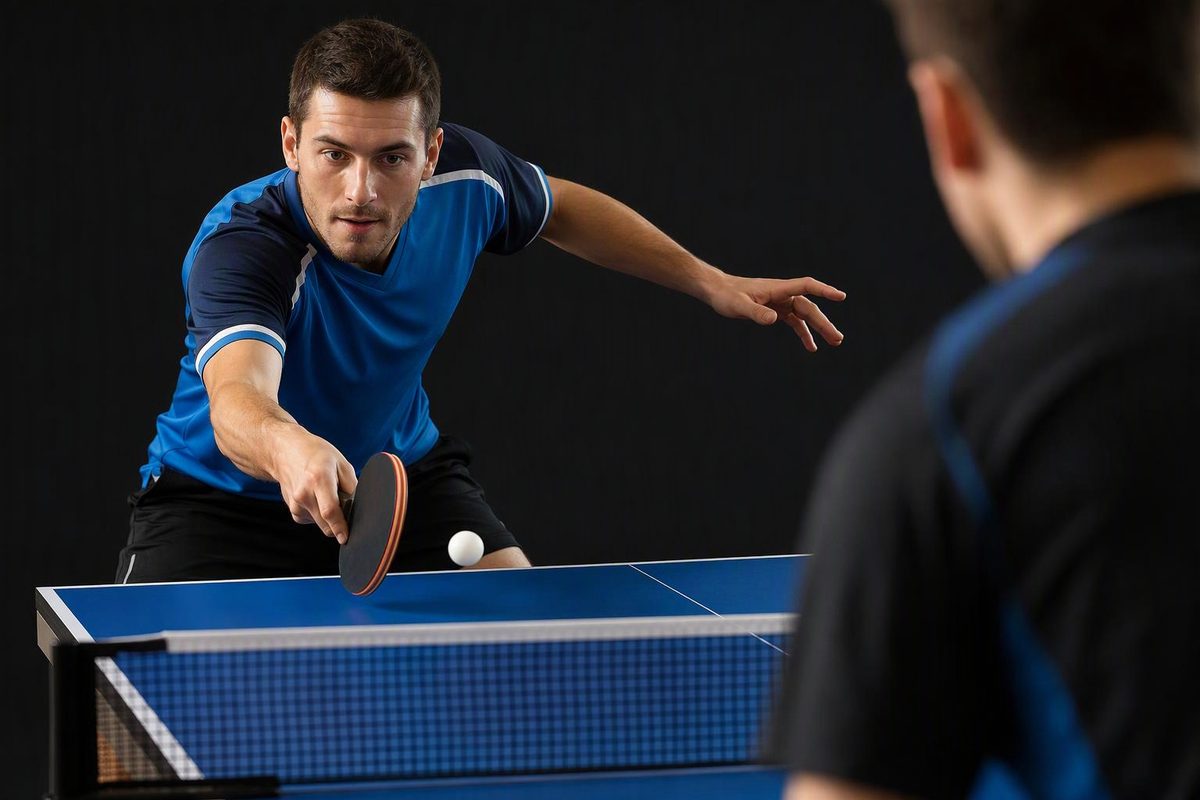
A drop shot is a soft return that lands short on your opponent’s side. Against a player defending well behind the table, it changes the problem from returning another hard ball to moving forward quickly.
The key is not simply hitting gently. You need early contact, control of the incoming spin and enough height to clear the net without leaving an easy attack. Use this 25-minute partner session to practise the forehand drop shot off a lob—a high defensive return.
When to use it
Look for an opponent well back from the table and a ball you can reach early while balanced. Coach Tom Lodziak recommends mixing drop shots into attacks against a lobber: contact softly just after the bounce, draw the opponent forward, then be ready to play deep or wide if they reach it. It is an option, not a guaranteed winner. Read Lodziak’s tactical guidance.
Do not force the shot when a deep, kicking bounce has crowded you or when you are still moving into position. For that decision, see smash or drop shot against a lob.
A short backspin serve can also be returned softly and short, usually called a short push. The intention overlaps, but the racket action must account for the different spin. Do not use one fixed racket angle for both balls.
Contact early with soft hands
Start with these cues:
- Move into reach before contact. Bend your knees and bring the racket close to the expected bounce. Avoid reaching with a locked arm.
- Meet the ball just after it bounces. Do not wait for a high lob to reach its peak.
- Relax your grip without losing racket control. “Soft hands” means avoiding a hard squeeze and forceful rebound—not letting the racket wobble.
- Keep the stroke compact. Use a small touch rather than a drive-sized forward swing.
- Adjust to spin. Against topspin, use a slow touch over the ball; against backspin, work underneath it. Adjust the racket angle from the result rather than copying one angle for every feed.
PingSkills coach Alois Rosario specifically recommends early contact and soft hands. In his forehand drop-shot demonstration, Tahl Leibovitz also emphasises contact close to the bounce and table, distinguishing contact underneath backspin from a slow touch over topspin.
Your checkpoint: a successful practice ball clears the net low and would bounce twice on the opponent’s side if left untouched. A ball that merely lands near the net but then travels off the end is not short enough.
A 25-minute partner session
Setup: a table, rackets, several balls and safe space behind both ends. One player uses their racket to feed controlled high balls to the other’s forehand. Begin with repeatable, light-spin feeds rather than maximum-height, heavy-spin lobs. Swap roles halfway through each block.
These are suggested practice targets, not formal skill standards.
1. Find the touch — 5 minutes
Feed one ball at a time. The receiver lets it bounce, plays a drop shot and watches its length. The feeder leaves the return untouched so both players can check the second bounce.
Sort results into four categories: net, long, short but high, and low and short. “Long” means the ball would not bounce twice on the opponent’s side. Change one thing at a time—grip pressure, swing size or racket angle.
2. Repeat the length — 8 minutes
Work in sets of ten feeds to the same reachable location, still leaving returns untouched. Aim for seven low, double-bounce returns out of ten before making the feed harder.
If most returns are long, try reducing the forward stroke and grip pressure. If they consistently hit the net, check that you are not closing the face too much. If they pop up, check the face angle and whether you are getting to the bounce late.
Record each player’s last set of ten as the session’s length-control baseline.
3. Read modest variation — 7 minutes
The feeder varies lob depth slightly and introduces modest topspin. The receiver drops only balls they can meet early and balanced; otherwise, they play a controlled attacking return.
Track the decision as well as the outcome. A successful attack on an unsuitable drop-shot ball is a good choice, not a failed repetition.
4. Recover and play — 5 minutes
Start each point with a controlled lob. After the drop shot, the feeder may move forward to return it, and the rally becomes live.
The receiver must recover immediately rather than watch the shot. If the opponent reaches it, look for a playable deep or wide placement—not an automatic winner.
Next session, repeat the same feeds used in the repeat-length block and compare your four result categories before increasing difficulty.