
Open Against Backspin—and Be Ready for the Next Ball
Train backhand topspin against long backspin and the following block with a 30-minute partner session, placement targets and robot adaptations.
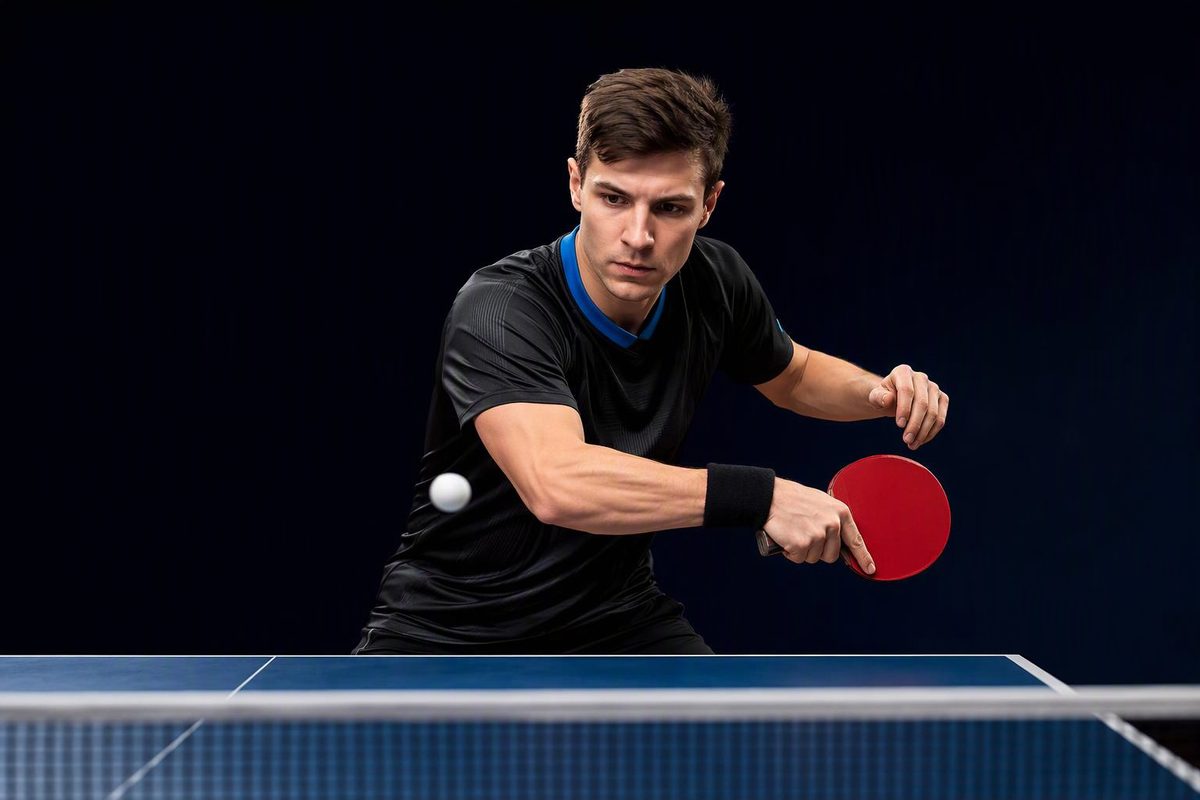
A reliable backhand in table tennis needs more than one swing. The stroke that lifts a long backspin push is different from the stroke you use on the following block. Practise them separately, then connect them.
This 30-minute session needs a partner, a table and a basket of balls. A robot can cover the isolated strokes; a partner provides the live opening-and-follow-up sequence. The technique cues below are for shakehand players using conventional inverted rubber—the smooth-surfaced type. Penhold players can use the separate reverse penhold backhand guide.
Choose the backhand for the incoming ball
Your backhand is a family of strokes, not a single shot:
- Drive: a compact attacking stroke for manageable no-spin or light-topspin balls. If you are still building basic contact, start with the backhand drive session.
- Block: a compact return of an opponent’s topspin attack. Coach Tom Lodziak recommends blocking as the simplest starting option for beginners facing fast attacks in his blocking lesson.
- Push: a controlled backspin return, useful when handling backspin. PingSkills’ push lesson identifies it as a core way to handle that spin.
- Topspin, also called a loop: an attacking stroke with a brushing contact that generates topspin. This session trains an opening topspin against long backspin, followed by another topspin against a block.
For this practice, push the short backspin ball and attack the long one when you have room and balance. That short-push-to-long-ball progression is recommended by PingSkills coach Alois Rosario; it is a drill choice, not the only possible match tactic.
Judge length by where the ball would bounce if you left it alone: a short ball would bounce at least twice on your side; a long ball would pass beyond the end line after one bounce. See Expert Table Tennis’s explanation of serve length.
Two topspin strokes, two preparations
Opening against long backspin
- Bend your knees and prepare the racket below waist height, with space to swing upward.
- Keep the wrist relaxed and the racket face slightly closed—tilted forward rather than facing upward.
- Position yourself to contact the ball in front of your body, not beside your hip.
- Rise through the legs and accelerate the forearm and wrist upward and forward, brushing the back of the ball.
- Finish around shoulder height, then return the racket to ready position.
These cues follow Lodziak’s backhand topspin against backspin guide. The aim is a controlled, spinning opening, not a flat hit through the backspin.
Following up against a block
Do not repeat the same low preparation automatically. Start around waist height, close the racket face and swing more forward, brushing toward the top of the ball with an upward component. Keep contact in front of your body; move your feet rather than reaching sideways.
Lodziak’s topspin-against-block guide makes the key distinction: a blocked return carries some topspin, so the preparation is higher and the swing more forward than against backspin.
Observable checkpoint: after your opening, does the racket return in front of you, or stay low while the block arrives?
The 30-minute backhand session
After your usual warm-up, set two broad placement targets: the opponent’s backhand half and forehand half. Use the whole half, not a tiny corner. Agree on gentle feeds that give you time to prepare. Count only usable feeds of the agreed spin, length and placement.
The timings below are for one player’s focused turn and include brief resets; swap roles afterward. The scores are practice targets, not universal standards.
0–3 minutes: establish contact
Rally easy backhand drives. Keep the pace low enough to make small foot adjustments between contacts.
Target: one sequence of ten controlled backhands. If this is difficult, stay with the drive session rather than adding backspin today.
3–10 minutes: open against a fixed long push
Your partner feeds long backspin to your backhand using multiball—one ball at a time from a basket. Aim each opening into their backhand half. Let the ball finish before the next feed.
Work in batches of ten. Record:
- openings that land;
- openings that land in the target half;
- whether contact stays in front of your body.
Target: seven landed openings out of ten before increasing feed speed.
10–17 minutes: topspin against a steady block
Start a backhand topspin-to-block rally. Your partner blocks steadily to your backhand; you use the higher preparation and more forward swing.
Target: five consecutive controlled topspins. Then aim to their forehand half, with your partner using a forehand block back to your backhand. If they cannot return that placement reliably, practise it one ball at a time instead.
Reduce pace if you begin reaching or lose your ready position.
17–25 minutes: connect opening and follow-up
Use one live ball per sequence:
- You serve backspin to your partner’s backhand.
- They push long to your backhand.
- You open to their backhand.
- They block back to your backhand.
- You play the follow-up topspin to the agreed target, then stop.
Score a complete sequence only when both your opening and follow-up land. Record ten usable attempts. Change the follow-up target after five; keep the opening target fixed so your partner can block reliably.
25–30 minutes: add the short-or-long decision
Start with a short backspin serve, then exchange short pushes. Your partner occasionally pushes long to your backhand without announcing it. Push the short ball; open against the long one, then try to handle the block.
Recover away from the table after each short push so you are not trapped over it when the long ball arrives. This follows Rosario’s short-and-long-push drill.
Count correct choices separately from successful shots. Choosing the intended stroke but missing it is a different problem from misreading the length.
Robot adaptation and quick fixes
With a robot, train long backspin openings and topspin follow-ups in separate blocks. Set a feed interval that lets you recover fully. A robot with suitable programmed spin changes can rehearse the low-to-high preparation transition, but it does not reproduce a partner’s block responding to your opening.
If the opening repeatedly hits the net, check that the racket starts low enough and that you brush upward rather than hit flat. If it flies long, check the racket angle and brushing contact. PingSkills coach Jeff Plumb gives these adjustments for topspin against backspin.
If openings land but follow-ups miss, check the transition first: higher preparation, more forward swing, contact in front. Next session, repeat the ten linked attempts at the same pace and compare complete sequences—not just your best opening.