
Build a Reliable Reverse Penhold Backhand
Learn reverse penhold backhand grip, contact and recovery cues, then build control with a focused 35-minute partner or robot practice plan.
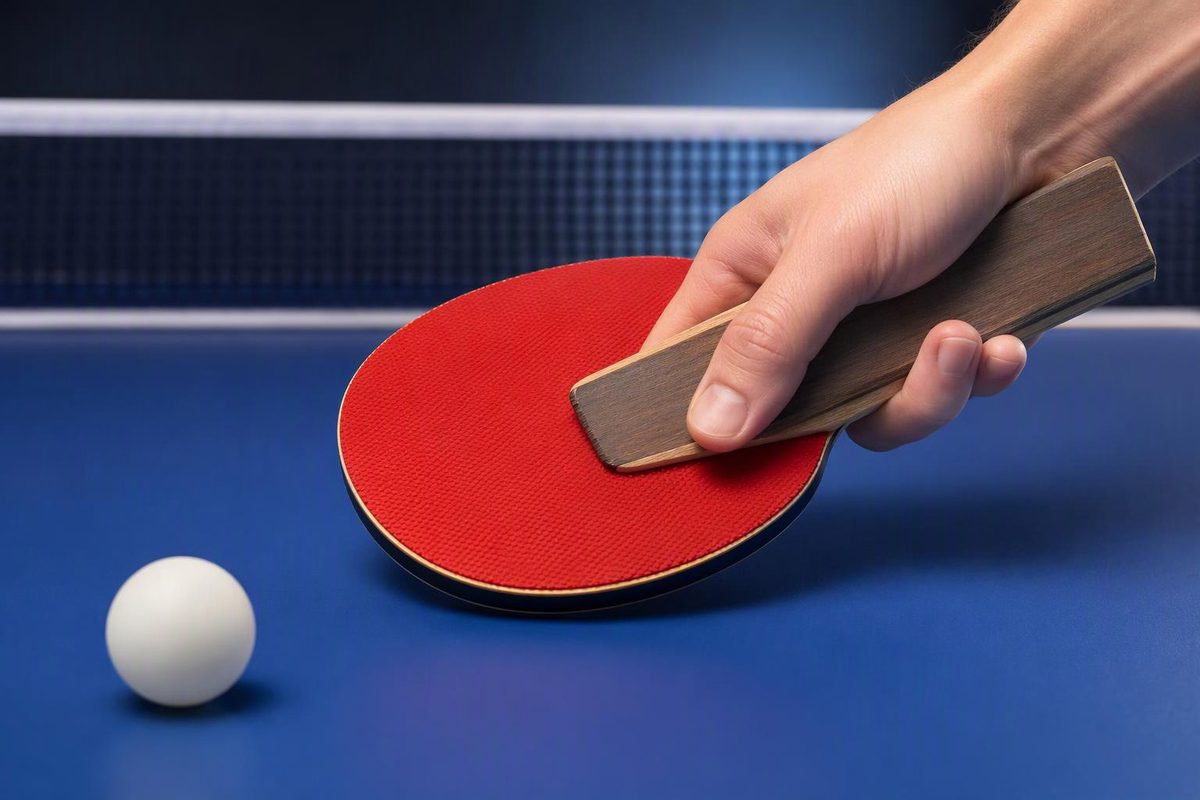
The reverse penhold backhand (RPB) uses the rubber on the back of a penhold racket to attack or counter from the backhand side. For a club player, the best starting shot is a compact topspin counter: set the racket face early, contact the ball in front and recover immediately rather than trying to produce maximum power.
The movement shares basic principles with a shakehand backhand, but your penhold grip must let the reverse rubber face forward before the swing begins, as PingSkills explains in its RPB guidance. The session below trains that compact counter against light topspin. Opening against backspin requires a more upward stroke and is a later progression.
Choose the miss you keep seeing; the diagnostic shows what to adjust first.
RPB Miss Diagnostic
Select the repeated result, not an occasional miss.
Prepare Earlier and Add Lift
Likely causes: The face is too closed, contact is late or the swing is too flat.
Next adjustment: Prepare earlier and add a little upward movement.
| Problem | Likely Cause | Next Adjustment |
|---|---|---|
| Into the net | Face too closed, late contact or flat swing | Prepare earlier and add a little upward movement |
| Repeatedly long | Overswing or face too open | Shorten the finish and close the face slightly |
| Contact near body | Elbow tucked back or feet too close | Create space and hold the elbow slightly forward |
| Changing angle | Finger pressure changes during the swing | Set the angle first and keep the grip quiet |
| Slow transition | Finish travels across the body | Stop the stroke in front and recover immediately |
Source: coaching cues in this guide, with RPB stroke principles from PingSkills.
A Partner or Robot Can Supply the Feed
The best setup is one partner who can block steadily to your backhand. Place two target markers deep on the table: one near the backhand corner and one near the opponent’s elbow.
A robot can provide regular light-topspin feeds to one backhand location. Reduce the frequency enough that you can reset after every stroke. The purpose is to repeat a complete stroke, not to survive an uninterrupted stream of balls.
This is not a solo ball-striking session, although you can rehearse the movement without a ball first. If the grip itself feels uncertain, check the basic finger positions in this table tennis grip guide before adding speed.
Build the Stroke in Three Parts
Set the Racket Before the Ball Arrives
Stand square or with your right foot slightly behind your left if you play right-handed. Reverse that stance if you play left-handed. Keep your knees flexed and your weight toward the front of your feet.
Bring the racket in front of your torso. Turn the reverse rubber toward the incoming ball before starting the forward swing. Do not wait until contact to find the angle.
Use a secure but relaxed penhold grip. Your thumb and index finger stabilize the racket while the fingers on the reverse side support it. Finger arrangements vary, so prioritize a position that lets you present the reverse rubber without wrist pain or a forced forearm position. Make small adjustments rather than rebuilding your entire grip at once.
Pause in the ready-to-hit position as a checkpoint. From the opponent’s view, the reverse rubber should be visible and roughly facing forward—not down at the table or sideways.
Drive With a Compact Forearm Action
Keep the elbow slightly forward of the body and allow the forearm to move outward and upward. PingSkills advises using the elbow as a pivot, closing the racket slightly and brushing the upper part of the ball to produce topspin in its RPB topspin guidance.
Against a light-topspin feed, contact the ball around the top of the bounce or just before it begins to fall. Meet it in front of your body. Use a short forward path with a small upward component; the faster the incoming ball, the less swing you need.
Do not manufacture power by snapping the wrist violently. Let the forearm establish control first. Add a small, natural wrist contribution only after you can repeat the same contact.
A clean contact should feel crisp and send a medium-arc ball forward with topspin. If the ball repeatedly drops into the net, open the face slightly or add more upward movement. If it repeatedly flies long, close the face slightly and shorten the swing.
Finish in Position for the Next Ball
Finish in front of your body rather than sweeping the racket across your chest. The racket should travel only far enough to complete the stroke, then return to a neutral position.
A large finish may work for one ball but leave your forearm trapped on the next. Use the rhythm hit, stop, reset.
Your recovery checkpoint is simple: you should be back in your ready position before your partner’s block crosses the net.
Follow This 35-Minute RPB Session
Shadow and Hand-Feed for 5 Minutes
Perform 20 slow shadow swings. Pause at three positions:
- Reverse rubber facing forward.
- Contact point in front of the body.
- Compact finish followed by recovery.
Then ask your partner to hand-feed 20 easy balls to your backhand. Make a controlled topspin contact and aim crosscourt. If you are using a robot, replace the hand feeds with a slow, widely spaced feed.
Session target: Land 15 of the final 20 balls without stopping to rebuild your grip between shots.
Fix the Backhand Feed for 10 Minutes
Your partner blocks or counters continuously to your backhand. Play only RPB counters at about 50–60% pace.
Work in five sets of 90 seconds with 30 seconds between sets. Count your longest clean sequence, but restart the count without stopping the drill after a miss.
Use one cue in each set:
- Racket prepared early.
- Contact in front.
- Elbow stable and slightly forward.
- Compact finish.
- Quick recovery.
Session target: Complete three rallies of at least eight controlled RPB contacts. If you cannot reach five contacts, reduce the feed speed before altering the stroke.
Alternate Two Placements for 8 Minutes
Keep the feed fixed to your backhand, but alternate your return between the deep backhand target and the opponent’s elbow. The elbow is the transition area between forehand and backhand, not one exact spot, so adjust the target to the opponent’s ready position.
Play four sets of 16 balls. Count a ball only when it lands in the intended half of the table.
Session target: Make 10 correct placements in one set of 16 while maintaining the same compact action in both directions. Change the racket angle and contact direction slightly; do not steer with a large sideways swing.
Link RPB and Forehand for 8 Minutes
Use a two-ball pattern:
- One feed to the backhand for an RPB counter.
- One feed to the forehand for a forehand drive.
Recover to neutral after each stroke rather than leaning toward the next known ball. Once the pattern is stable, ask your partner or set the robot to vary the order between backhand and forehand.
Session target: Complete 10 two-ball patterns without crossing your feet, standing upright or carrying the RPB finish into the forehand preparation.
Finish With a 4-Minute Pressure Test
Play points beginning with a simple serve and a cooperative return to your backhand. You must use RPB on the first suitable backhand topspin ball; after that, play the point freely.
Score one training point for choosing the correct stroke on a suitable ball and a second for landing it. This separates decision quality from outcome. Record the result and repeat the same test in your next session. Structured practice with feedback is more useful than merely accumulating repetitions.
Progress From Control to a Complete Backhand
Do not add speed merely because several balls landed. First make sure the racket face is set before the forward swing, the contact stays in front and the finish does not interfere with recovery. Increase the feed speed only when those three features remain stable through a rally.
The next progression is placement under less predictable feeds. Move from a fixed backhand ball to backhand-or-forehand variation, then use the RPB during points. Opening against backspin should come after the light-topspin counter is dependable because it needs a more upward stroke and a different adjustment to the racket face.
RPB is not merely an emergency block. An ITTF Education review of changing playing styles identified the backhand as a strength of elite penholder Wang Hao. Your immediate target is more practical: make the reverse surface available early, contact in front and recover in time to play the next ball.