
Backhands and Kitchen Play: Train the Table Tennis Short Game
The kitchen belongs to pickleball. For table tennis, use this 25-minute partner session to train short backhand pushes, recovery and length decisions.
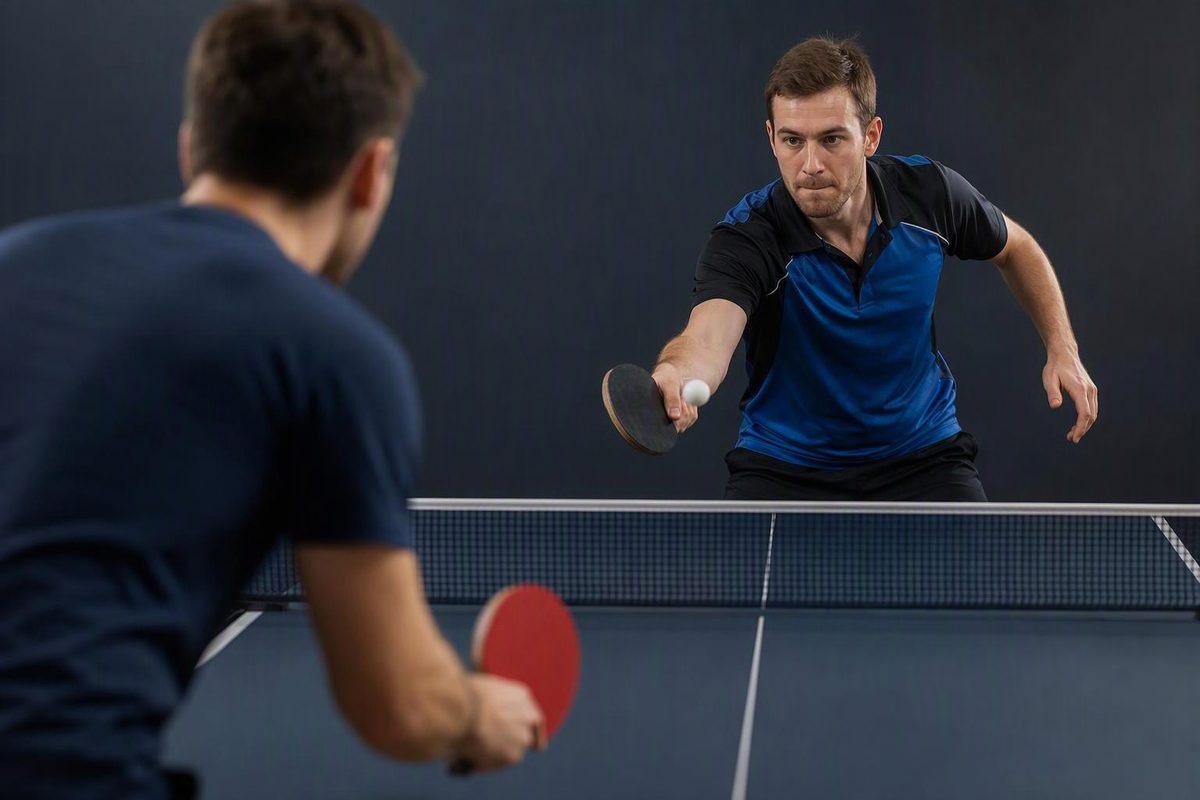
The kitchen belongs to pickleball, not table tennis. It is pickleball’s non-volley zone: players cannot volley from it, but may enter it to play a ball after a bounce. See USA Pickleball’s 2026 rules summary.
For a table-tennis player, the useful training task is short backhand play over the table: keeping a return low and short, then recovering to handle the next ball. This 25-minute partner session trains that skill without importing pickleball rules or strokes.
The rule difference that matters
In table tennis, let the incoming ball bounce on your court before returning it. Hitting it before that bounce while it is above or travelling towards the playing surface is obstruction—not a legal volley. There is no kitchen line restricting where you stand. When reaching over the table, keep your free hand off the playing surface, avoid touching the net assembly and do not move the table during the rally. These distinctions follow the 2026 ITTF laws reproduced by Table Tennis England, particularly laws 2.5.8 and 2.10.1.6–11.
Setup: partner required
Use a table, rackets and a supply of balls. One player feeds; the other practises receiving for 25 minutes. Swap roles and repeat if both players want the full session.
Start with gentle, low, short backspin serves to the receiver’s backhand. A short ball would bounce twice on the receiver’s court if left untouched. Avoid sidespin initially so you can work on length without an extra variable.
Agree on two receiving targets:
- Short: the return would bounce twice on the feeder’s court if left untouched.
- Deep: the return’s first bounce lands in the final third of the feeder’s court.
The feeder should occasionally let a return bounce again to verify its length. A first bounce near the net does not, by itself, prove that a return is short.
Minutes 0–3: establish a controlled push
Receive each short backspin serve with a backhand push—a controlled stroke that brushes underneath the ball to produce backspin.
Keep your knees bent, racket in front and elbow comfortably bent. Open the racket face slightly, meaning tilt it towards facing upward. Move the forearm forward rather than swiping sideways, then return the racket to ready position. These are the basic mechanics described in Expert Table Tennis’s backhand-push guide.
Checkpoint: make five controlled returns in a row before trying to make every ball very short.
Minutes 3–10: shorten the return
Now aim for the short target. Move in early enough to contact the ball just after its bounce, with a relaxed grip and a small, controlled stroke. Avoid a sharp jab. PingSkills’ short-push lesson identifies early contact and soft hands as key control cues.
After contact, move back out to your ready position. For a right-hander receiving a reachable short ball inside the backhand corner, stepping in with the right foot and pushing back off it is a useful starting pattern; mirror it for a left-hander. Don’t force that pattern for a ball wide outside the corner. PingSkills’ short-ball footwork guidance distinguishes those positions.
Checkpoint: test the last ten returns. Record how many bounce twice on the feeder’s court, plus any obvious high returns. If you keep sending the ball long, reduce the forward impulse before changing several things at once.
Minutes 10–17: choose short or deep
Keep the incoming serve unchanged. Before each serve, the feeder calls “short” or “deep.” Send your backhand push to that target, then recover.
For the deep return, extend the forward stroke enough to reach the final third. For the short return, return to the softer contact. Keep both trajectories low rather than adding height to gain distance.
Checkpoint: score the final ten balls for the called length. Record net misses separately: they are not successful short returns.
Minutes 17–25: read the next ball
Begin a short pushing exchange. The feeder then sends an occasional long backspin push to your backhand without announcing it. For this drill, a long feed would leave over your end line after one bounce if left untouched.
On a short ball, step in and push short. On a long ball, create room and use your trained backhand topspin. If that stroke is not yet reliable, use a controlled deep push as a temporary fallback and practise backhand topspin against backspin separately. Restart with a short serve after the long-ball return.
This short-to-long variation follows PingSkills’ recommended partner drill.
Final checkpoint: tally the last ten receiving decisions separately from execution. Did you recognise short versus long correctly? Did the chosen return land? Next session, repeat the block with the weaker score rather than simply adding speed.