
Can You Volley in Table Tennis?
You cannot volley a live ball over the table. Learn the obstruction rule, when an out ball is safe to catch, and practise bounce-first decisions.
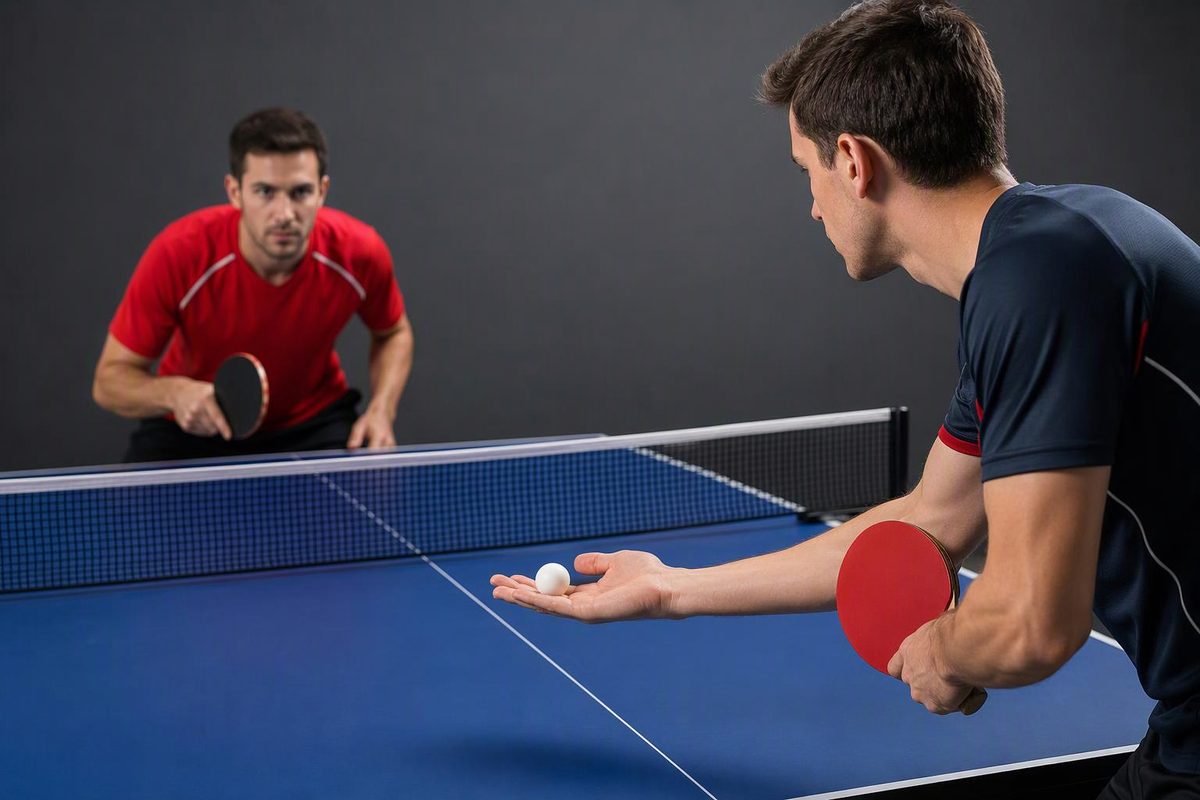
No—you cannot volley an incoming live ball over the table before it bounces on your side. In table tennis, that is obstruction, and you normally lose the point. But touching a ball after it has already gone out is different: the rally is over, so catching it does not cost you the point.
A volley means hitting the ball before it bounces. A fast block taken just after the bounce is not a volley and can be perfectly legal.
What counts as obstruction?
Under ITTF Law 2.5.8, you obstruct the ball if you—or anything you wear or carry—touch it while it is in play, above or travelling towards the playing surface, before it has touched your court since your opponent last struck it. Law 2.10.1.6 awards your opponent the point for obstruction, unless the rally is a let. Source: ITTF Laws of Table Tennis, 2026.
That means:
- Your racket is not the only thing that matters. Your shirt, body or free hand can obstruct the ball too.
- Intent does not decide the call. Accidentally stopping the ball can still be obstruction.
- “It was obviously going long” is not enough. If you touch it while it is still above the table, before a bounce on your side, you can lose the point.
The rule is about the ball’s position and path at contact—not whether you think the opponent’s shot would eventually miss.
When can you catch an out ball?
If your opponent’s shot passes beyond your end line without touching your court, you have won the point under Law 2.10.1.4, unless the rally is a let. Catching it afterwards does not reverse that result. You do not need to wait for it to hit the floor. Source: ITTF Laws, section 2.10.
| Situation | Ruling |
|---|---|
| You hit an incoming ball above your half before it bounces | Obstruction: your opponent normally wins the point. |
| You catch a likely long ball while it is still above the table | Still obstruction; judging it “out” early does not protect you. |
| The ball passes beyond your end line without bouncing, then you catch it | You have already won the point, unless the rally is a let. |
| The ball bounces on your side, then you block it immediately | Not a volley; the return must still land on your opponent’s court. |
One service exception matters: if a serve touches the net assembly and the receiver or their doubles partner obstructs it, Law 2.9.1.1 makes the rally a let—a replay, not a scored point. That is not permission to volley ordinary serves. Source: ITTF Laws, section 2.9.
Five-minute partner drill: bounce or leave
Setup: A table, rackets, several balls and a partner. No robot is needed. Ask your partner to send gentle balls to your backhand from the opposite end, mixing shots that bounce on your side with shots that travel long without bouncing.
Action: Return the balls that bounce using a compact block. Leave the long balls untouched until they have clearly passed beyond your end line. Keep your racket out of their path rather than reaching forward to collect them.
Checkpoint: Over 20 feeds, record premature contacts separately from missed returns. Aim for zero contacts before the required bounce; only then increase the pace.
For a firmer attacking stroke after the bounce, use the backhand punch technique and drill. For these returns, the cue stays the same: early after the bounce, never before it.