
Forehand Drive Technique and a 25-Minute Session
Learn forehand drive technique, fix common misses and practise placement, movement and recovery in a 25-minute partner or robot session.
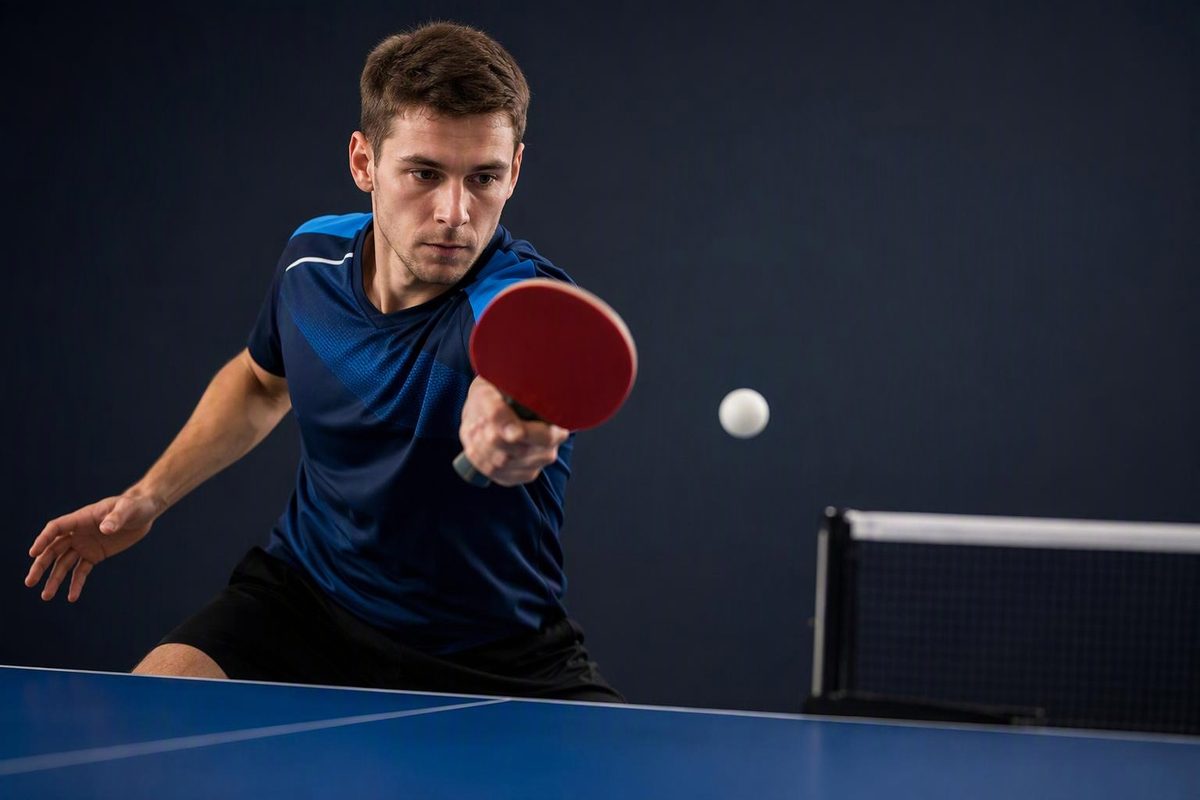
A forehand drive is a compact attacking stroke with a little topspin—not a completely flat slap. Use it to control suitable balls close to the table before adding pace. PingSkills also calls it the forehand counterhit and treats it as a foundation for developing the forehand topspin and loop. PingSkills: forehand counterhit
This session needs a partner who can feed or block consistently, or a robot. The goal is to land controlled drives in a chosen area and recover before the next ball. It focuses on solid contact rather than the stronger brushing action covered in our forehand topspin technique session.
Choose the right ball
Start with predictable, moderate-paced topspin or no-spin balls to your forehand. A drive suits a ball with enough height for a forward stroke. Coach Tom Lodziak notes that even light backspin can be driven when the ball is high enough, but a low, heavily backspinning ball needs a different approach. Lodziak: when to use a forehand drive
Do not practise this stroke by forcing every push over the net. For long, low backspin, work on the forehand loop against backspin instead.
Forehand drive technique: turn, contact, recover
The cues below describe a right-handed player; reverse the sides if you play left-handed.
- Set your base. Start with feet comfortably apart, knees flexed and your right foot slightly behind your left. Leave enough space beside your body to swing without squeezing your elbow against your ribs.
- Prepare compactly. Hold the racket around waist height. Slightly close the face—the top edge leans forward—and make a small backward turn through your waist. Avoid taking the racket far behind you.
- Move forward and slightly upward. Turn forward as the ball approaches. Let the body turn and arm movement work together; do not simply swipe across the ball with your wrist.
- Meet the ball in front. Contact in front of your body and to your forehand side, rather than waiting until the ball is beside or behind your hip. Make a solid contact rather than trying to brush as thinly as possible.
- Finish in front, then reset. Keep the follow-through compact enough that you can return to your ready position before the next feed.
The waist-high preparation, slightly closed racket, forward-and-up swing and contact in front follow Lodziak’s forehand drive guidance. He specifically warns against hitting downward or letting the arm travel across the body, which slows recovery.
Observable checkpoint: after each shot, can you face the next ball with the racket ready, without having to untwist yourself?
A 25-minute forehand drive session
Setup
Complete your usual physical warm-up first. Choose a large target: the crosscourt half of your partner’s side, leaving room inside the edges. Agree a feed that reaches your forehand comfortably without forcing you to stretch.
- Partner: use gentle feeds or blocks. Consistent placement matters more than challenging pace.
- Robot: use a modest topspin setting and an interval that lets you finish and reset. Begin with one landing point.
- Timing: the 25 minutes below are for one hitter, including brief resets and ball collection. With a partner, swap roles afterward.
The counts are practice targets, not universal standards. Slow the feed or enlarge the target if you cannot repeat the stroke. When counting attempts, exclude feeds outside the agreed area, but include your own misses. A partner’s missed block does not erase your successful shot.
Minutes 0–3: establish contact
Hit gently from one position. Focus only on contact in front and a finish that leaves you ready.
If the rally keeps breaking down, use individual feeds with a pause between balls. In advice about teaching older players with established habits, PingSkills recommends slow, predictable feeds and small, isolated changes. Use that same approach here if you are rebuilding a habit. PingSkills coaching advice
Minutes 3–10: control crosscourt placement
Drive every suitable feed into the crosscourt half. Keep the pace comfortable.
Count two sets of 20 playable feeds. Record both balls landing on the table and balls landing in the target half. Aim for 16 of 20 on the table before increasing speed. Change only one cue between sets, and use the remaining time for easy rallies.
Minutes 10–16: add a small movement
Alternate feeds between your usual forehand position and a slightly wider forehand position. Move your feet to create room, then drive crosscourt. Do not turn this into a reaching exercise.
On a robot, use two-point placement if available. Otherwise, retain the fixed feed and focus on recovery; it will not test movement between landing points.
Checkpoint: can you make ten controlled drives while arriving balanced and recovering after each one? If not, reduce the distance between feeds.
Minutes 16–22: make placement less predictable
Ask your partner to vary the feed within that same forehand area. Keep the speed and spin similar so the new challenge is positioning, not everything at once. Use robot random placement only within a manageable range; if unavailable, continue the previous drill.
Watch the incoming ball, adjust your feet and keep the swing compact. When contact starts drifting behind your body, slow the drill rather than swing harder. For a wider progression, use the footwork training session.
Minutes 22–25: repeat the stationary check
Return to the original fixed feed and crosscourt target. Count 20 playable balls using the same two measures as before. If time runs out, record the actual number of attempts and compare success rates rather than raw totals. Note one cue that helped and one problem to address next session.
Fix the miss without changing everything
Use these as adjustments to test, not automatic diagnoses:
- Repeated nets: check for a downward swing or an excessively closed racket. Also confirm the feed is suitable for a drive, not low heavy backspin.
- Repeated long balls: reduce pace first, then try a slightly more closed face while keeping contact in front.
- Clean contact but poor recovery: shorten the backswing and stop the follow-through from wrapping across your body.
- Good stationary shots but misses after movement: narrow the feed spacing. Keep the stroke steady while you rebuild the positioning.
Once placement and recovery hold up, use the forehand attack session to practise backspin openings and the following ball.