
Build a Reliable Forehand Loop Against Backspin
Learn to lift long backspin balls with a forehand loop, fix common misses, and train placement and recovery in a 30-minute partner session.
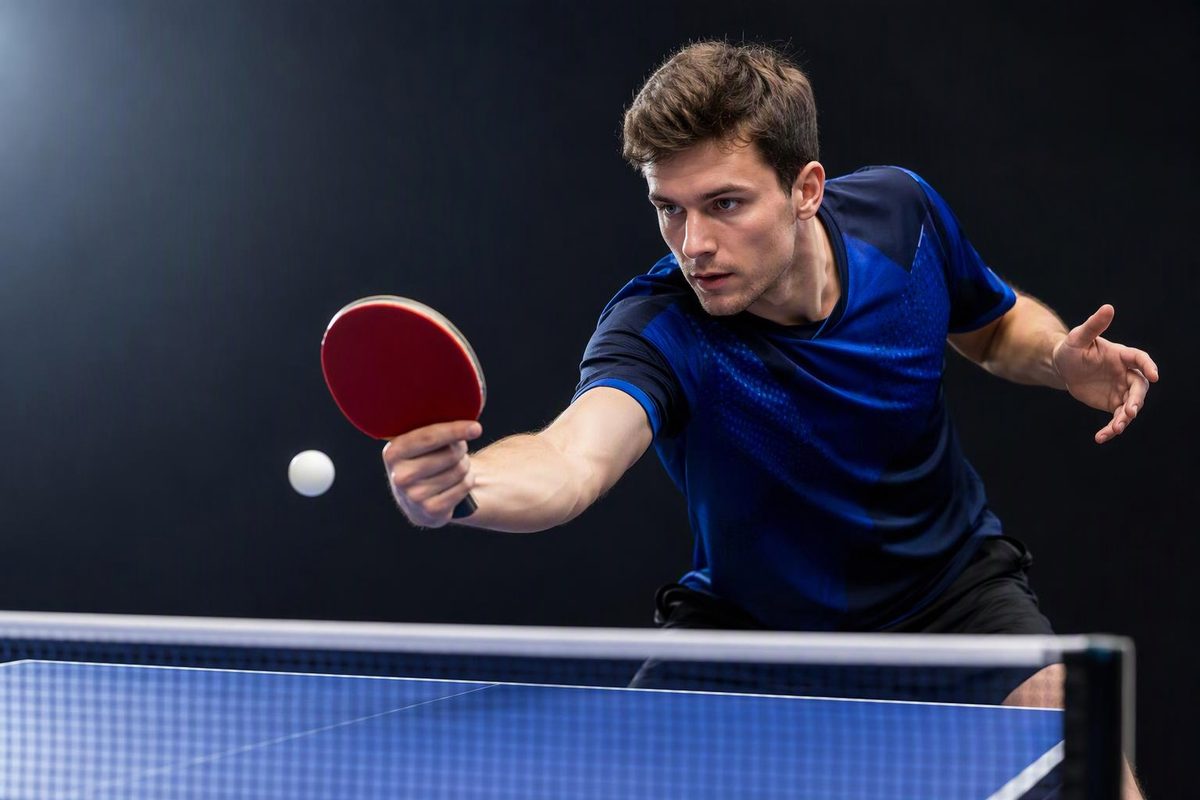
A forehand loop is a topspin attack: you brush the ball to generate forward rotation rather than hit it flat. Against backspin, start the racket lower and swing more upward than you would against a block. Your first target is a controlled opening attack—not a winner.
Setup: This 30-minute session needs a partner, balls and a table. A backspin-capable robot can cover the contact and placement work. Suitable mixed-spin feeds can also rehearse the transition from backspin to topspin, but cannot reproduce the actual serve–push–loop–block exchange. Solo shadow swings can rehearse movement, not verify contact.
Choose a ball you have room to loop
Begin with a long backspin push to your forehand: a ball that would leave your end of the table before bouncing a second time. Move so you can contact it in front of your body without reaching or being cramped by the table.
Do not force this full stroke over the table against a short ball. PingSkills recommends practising the distinction by watching serves and pushes, then topspinning the long balls and pushing the short ones. See its long-versus-short guidance.
If a fast, deep push leaves little preparation time, work on positioning and a shorter preparation rather than trying to squeeze in a large backswing.
Five cues for the stroke
These directions describe a right-hander; reverse left and right if you play left-handed.
- Get balanced first. Keep your knees flexed, with the right foot slightly behind the left. Adjust your feet before swinging so there is space between your hitting arm and torso.
- Prepare below the ball. Turn your hips and shoulders back, loading the right leg. Lower the racket below the expected contact height; use your knees as well as your arm rather than folding forward at the waist.
- Use a less-closed racket face. Start slightly closed—the top edge tilted forward—but less closed than for looping a block. There is no single correct angle for every backspin ball.
- Accelerate upward and forward. Push through your legs and turn forward, brushing up the back of the ball. For the initial controlled loop, aim to contact near the bounce peak or just after, in front of your body. More backspin generally calls for a more upward action.
- Finish high, then recover. Let the racket rise naturally, then return it to ready position. Do not stay upright watching whether the shot lands.
These cues follow Table Tennis England’s forehand coaching guidance, which distinguishes the lower preparation, less-closed face and upward brushing action needed against backspin. Tom Lodziak’s technique guide likewise emphasises starting low, finishing high and accelerating through contact.
Checkpoint: Can you produce a curved flight that clears the net and lands, while finishing balanced enough to play another ball? A big finish alone does not prove you made good brushing contact.
A 30-minute partner progression
Use the opponent’s diagonal half as a broad landing target. Count only feeds that reach the agreed forehand area with the intended length and spin; an unsuitable feed is a replay, not your miss. The numbers below are practice targets, not universal standards.
0–3 minutes: Warm up and settle the feed
Play easy forehand drives, then practise predictable long backspin pushes to your forehand. To start each repetition, serve gently with backspin and have your partner push long. Agree on a manageable pace and moderate spin before counting shots.
3–11 minutes: One location, one opening
Serve, receive the agreed long push, loop diagonally, then recover and reset. Work in batches of ten.
Record two things:
- Loops landing on the table.
- Loops landing in the diagonal target half.
Aim for seven on the table out of ten before adding pace. If you fall short, keep the feed unchanged and adjust one cue—not your entire stroke.
11–18 minutes: Adjust to different backspin
Keep the same serve-and-push start. Your partner alternates announced lighter and heavier backspin pushes to the same location. Keep placement and speed as similar as possible.
Make small changes to racket angle and upward acceleration rather than simply swinging harder. Once both feeds are manageable, let your partner vary the spin without announcing it.
Watch the feeder’s contact as well as the ball. Table Tennis England warns that treating a no-spin ball like heavy backspin can send the loop off the end of the table. Do not add disguised no-spin until the two backspin feeds are under control.
18–26 minutes: Open, then play the block
Use this sequence:
- You serve backspin.
- Your partner pushes long to your forehand.
- You loop diagonally.
- Your partner blocks to your forehand.
- You play one controlled topspin, then reset.
The fourth ball is no longer backspin. Prepare the next forehand higher and swing more forward than for the opening loop; do not repeat the same lifting action. This distinction is covered in Table Tennis England’s guidance on topspin against a block.
Need a consistent starting serve? Use the heavy-backspin section of Spin Serves: Your First Three.
26–30 minutes: Test the decision
Play ten serve-and-return starts. Your partner may push short or long to your forehand. Push the short return; loop the long one, then continue the rally.
Record correct shot choices separately from successful loops. A missed loop after correctly reading a long ball is a different problem from trying to loop a short one.
Robot adaptation: Use fixed long backspin for the first contact block, then vary spin if the machine permits. For the transition block, alternate a backspin opening feed with a topspin feed to your forehand if the robot supports it. Otherwise, continue backspin openings and practise returning to ready position between feeds. Finish with ten counted openings, recording placement and recovery. That tests execution, not serve-return reading.
Fix the miss you actually see
| What happens | First adjustment to test |
|---|---|
| Repeatedly into the net | Try opening the face slightly; if that does not help, check for upward brushing rather than a straight-forward drive. |
| Repeatedly off the end | Check whether the feed has less spin than expected; try a slightly more closed face or less lift, changing one at a time. |
| Contact is beside or behind you | Prepare earlier and adjust your feet so contact returns to the front of your body. |
| Opening lands, but the next ball is missed | Recover sooner and stop using the backspin lifting action against the block. |
For repeated net misses, PingSkills coach Alois Rosario specifically recommends checking racket angle and brushing contact before focusing on additional body power. Keep the next batch of feeds identical so you can tell whether your adjustment helped.