
Build a Legal Serve, Then Add Backspin and Control
Learn the legal table tennis toss, forehand contact and backspin technique. Use a 15-minute solo drill to test placement, serve length and recovery.
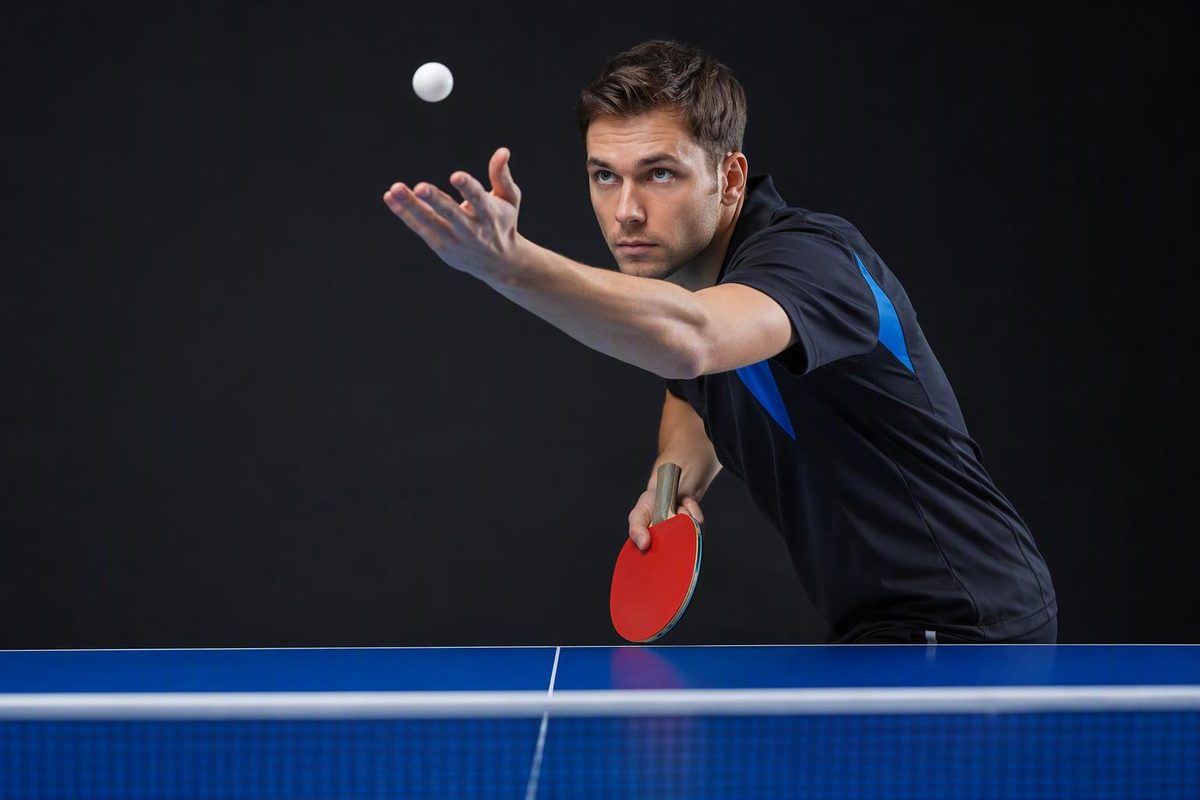
To serve in table tennis, toss the ball near vertically from an open, stationary palm so it rises at least 16 cm, strike it as it falls, and make it bounce on your side before landing on your opponent’s side. Keep the ball visible, above the playing surface and behind your end line until contact. Learn a controlled forehand serve first, then add a brushing contact for backspin.
Choose the stage you can repeat reliably; use the next-step drill shown below.
Your Next Serve Drill
Stay With Control Serves
Practise a stable, near-vertical toss and a compact stroke against the back of the falling ball. Watch for a bounce on your court, then the receiver’s court.
Checkpoint: Aim for eight successful serves out of ten while following the legal-action checklist. This is a practice target, not proof of legality.
Add a Brushing Contact
Open the racket face and brush forward underneath the descending ball. Start with the forearm; add wrist movement only when contact is repeatable.
Checkpoint: Repeat the brushing contact before trying to make every serve short.
Reduce Forward Shove
Keep the brush quick but make contact finer. Let the serve continue untouched to check whether it bounces twice on the receiver’s court.
Checkpoint: Count double-bounces and note high balls. Double-bouncing checks length, not spin strength.
Source: The practice progression in this guide. Check toss, visibility and the full legal action separately from landing results.
For the solo session, you need a table with a net, your racket and 10–20 balls. No partner or robot is needed, though a partner is useful afterward to check your service action and test the returns it produces.
Make Every Serve Legal
Build these requirements into every repetition:
- Start with the ball resting freely on the open palm of your stationary free hand.
- Keep the ball above the playing surface and behind your end line from the start until contact.
- Toss it near vertically upward, without adding spin, so it rises at least 16 cm after leaving your palm.
- Strike it on the way down, before it touches anything else.
- Keep the ball visible to the receiver. Move your free hand and arm out of the space between the ball and the net as soon as you toss.
- Make the ball bounce first on your court, then on the receiver’s court. In doubles, those bounces must be in your right half-court and the receiver’s right half-court; singles does not require diagonal serving.
These are the service requirements in the ITTF’s 2026 Laws of Table Tennis, section 2.6. For lets, faults and a fuller check, use our serve-rules checklist.
Landing the ball correctly does not establish that the whole action is legal. Ask a partner to check your toss and visibility when possible; your solo landing score cannot confirm those parts of the action.
Start With a Controlled Forehand Serve
This stance is a starting setup for a right-hander; reverse it if you are left-handed.
- Set your base. Stand behind the end line with feet comfortably apart, knees slightly bent and your left foot a little forward. Choose a broad landing area on the receiver’s side.
- Prepare beside the ball. Hold the ball in front of you on your open left palm. Keep the racket on your right side with a compact backswing and a comfortable grip.
- Toss without chasing. Lift the ball near vertically. Practise a toss you can contact without leaning sideways or reaching forward over the table.
- Contact the falling ball. Use a short forward stroke against the back of the ball, directing it slightly downward toward your own court. Avoid a big swing or forceful wrist snap.
- Watch both bounces. Establish the correct bounce sequence first. Then adjust the racket angle and forward force until the ball clears the net without a high arc.
- Recover immediately. Bring the racket in front of your body and settle into a balanced ready position. Do not stay sideways after serving.
Use eight successful serves out of ten, while following the legal-action checklist, as a practice target. You should be able to repeat the action without chasing the toss before adding more speed. This is a training checkpoint, not a legal standard.
Add Backspin Before Chasing a Short Serve
Backspin comes from brushing underneath the ball rather than hitting squarely through its back. Open the racket face—turn the hitting surface upward—and move it forward under the descending ball with a thin, quick contact.
Start with a simple forearm action; add wrist movement only when contact is repeatable. This follows the contact progression described in Expert Table Tennis’s backspin-serve guide. Learn to brush reliably before demanding a short serve.
To shorten the serve, reduce the forward shove while keeping the brushing action quick. PingSkills coach Alois Rosario recommends a finer brushing contact to reduce forward momentum.
Check length by letting the ball bounce: a short serve would bounce twice on the receiver’s court if left untouched. Do not judge it solely by where it first bounces; spin affects its path, as PingSkills explains. The double-bounce test measures length, not how much backspin you generated.
Test Your Serve With a 15-Minute Solo Session
Include ball collection within each block. If the basic action is not yet repeatable, stay with control serves rather than forcing the backspin progression.
| Time | Action | Checkpoint |
|---|---|---|
| 0–3 minutes | Practise the toss, then gentle control serves. | Stable toss, descending contact, correct bounce sequence. |
| 3–7 minutes | Aim at the receiver’s backhand half; count in batches of ten. | Record correct bounce sequences and target hits separately. |
| 7–12 minutes | Practise backspin; shorten it once brushing is reliable. | Count double-bounces on the receiver’s side; note high balls. |
| 12–15 minutes | Test ten serves with the full routine and recovery. | Record target hits and, for short serves, double-bounces. Count every miss. |
Keep checking the full service action during the target block. A ball that hits your chosen area can still come from an illegal toss or hidden contact.
If you keep missing contact, simplify the stroke and stabilise the toss. If backspin serves keep going long, try thinner contact rather than slowing the whole action. If they are short but high, work on a lower flight before adding more spin.
Repeat the ten-serve test at your next session. Once the basic action holds up, use your first three spin serves to develop backspin, sidespin and a disguised no-spin variation.