
Turn Table Tennis Observations Into a Useful Feedz Report
What Feedz does for table tennis coaches, its limits, and a 35-minute serve-and-third-ball session for specific, testable feedback.
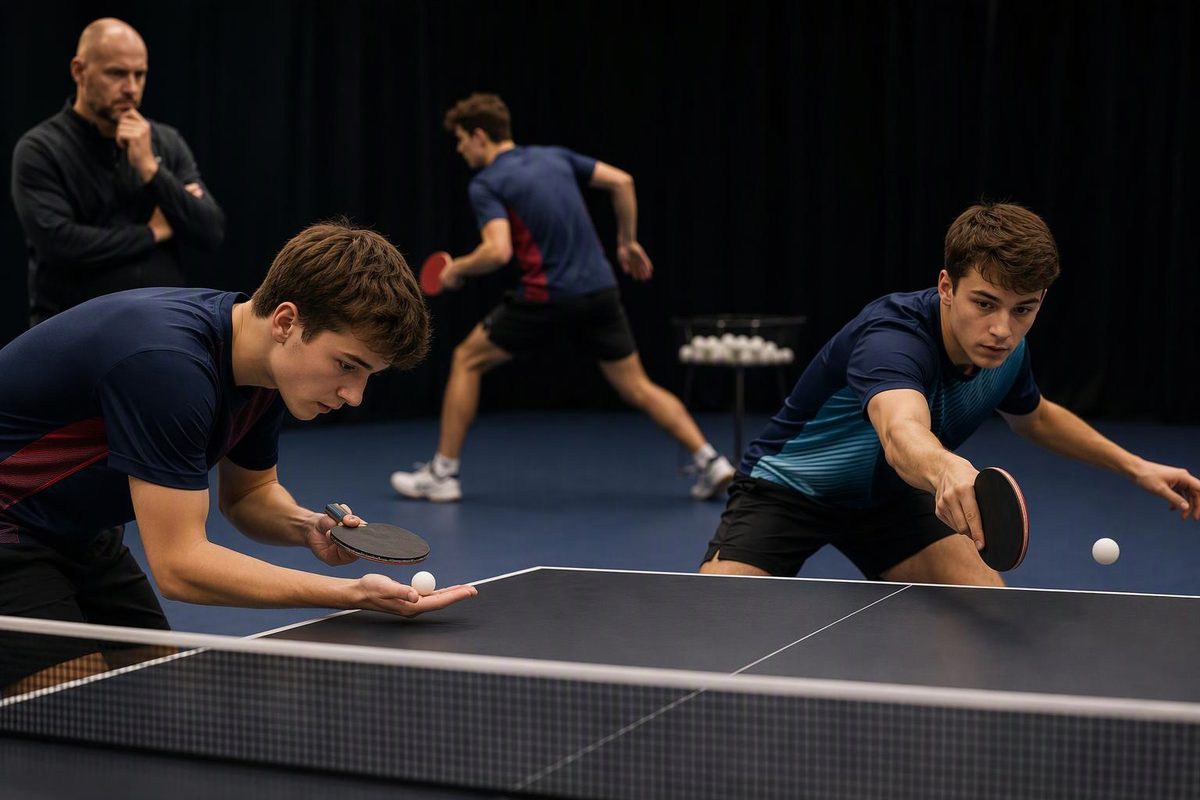
Feedz is designed to turn a coach’s spoken observations into a structured written report. The coach then reviews, approves and shares it. It is a feedback-documentation tool—not a replacement for observation, technical knowledge or a conversation with the player.
Table Tennis England has partnered with Feedz and says its performance team is already using the platform. The partnership is intended to give around 700 coaches in England discounted access, although details of the wider rollout were still to follow in its announcement. Table Tennis England describes the partnership and workflow.
What Feedz can—and cannot—do
The basic workflow is straightforward:
- The coach records observations as a voice note.
- Feedz generates a structured report.
- The coach checks, approves and shares it.
Depending on the chosen workflow, reports can be shared by PDF, email, in-app delivery or a messaging platform. Feedz also says reports can include drill videos and professional examples, while coaches can make amendments and change the writing tone by voice. Its organisation-level features include bespoke coaching frameworks and central management. These are capabilities described by Feedz, not independent evidence that the platform improves table tennis performance.
That distinction matters. Software can structure what a coach records, but it cannot make a vague observation useful. “Your forehand needs work” remains poor feedback in polished prose. A useful report identifies the situation, describes observable evidence, sets one priority and gives the player a way to test it.
A systematic review of 31 team-sport studies found limited agreement about which feedback types were most important to measure and questioned the quality of verbal feedback where studies used consistent categories. It did not study table tennis or Feedz, but it supports a cautious principle: more recorded feedback is not automatically better feedback. Read the review abstract from Edge Hill University.
Use this five-part voice-note structure
Record the note immediately after the drill, in this order:
- Context: Name the exact pattern observed.
- Evidence: State what happened without guessing at the cause.
- Priority: Choose one change rather than listing every fault.
- Action cue: Tell the player what to do or notice.
- Test: Define the next drill and a measurable target.
For example:
Against a long push to the backhand half, you landed 6 of 15 forehand attacks. On eight misses, contact was late and your right foot was still moving as the ball arrived. For the next block, prioritise arriving before the bounce and becoming balanced before starting the forward swing. Repeat 15 balls and aim for 10 controlled attacks to the receiver’s backhand.
This gives the player a situation, evidence, one controllable priority and a retest. It also prevents the generated report becoming a catalogue of corrections.
A 35-minute session that produces useful feedback
Needs: One player, one coach and one feeding partner; one table; at least 30 balls; two target markers; and a phone or tablet with Feedz access. The coach can receive instead, but a separate feeder makes observation easier.
Pattern: Short backspin serve, long push, third-ball attack.
The server serves short backspin. The receiver pushes long to a nominated half, and the server moves into position and attacks to a marked target. If the serve is not yet reliable, use the three-spin-serve progression before attempting the full pattern.
1. Set two success criteria — 3 minutes
Agree on two outcomes:
- the serve would bounce twice on the receiver’s side if untouched;
- the third-ball attack lands on the chosen half of the table.
The serve must also be legal; use this table tennis serve checklist if the player or coach is unsure.
Ask the player to choose one personal cue, such as “recover to neutral after serving” or “move first, swing second.” The coach should record outcomes as well as movement observations.
2. Establish a baseline — 8 minutes
Play 20 repetitions. Use the same short backspin serve and have the receiver push long to the server’s backhand half. The server steps around and plays a controlled forehand to the receiver’s backhand target.
Record:
- legal, short serves out of 20;
- successful third-ball attacks;
- the most common miss;
- how often the player was stationary and balanced at contact.
Do not correct every ball. A coaching position paper argues that overusing prescriptive verbal information can limit opportunities for athletes to explore and self-regulate; it recommends applying feedback carefully to guide attention toward relevant task information. Although its model focuses on specialist coaching in team sports, the practical warning against constant instruction is useful here. Read the paper through PubMed Central.
3. Give one intervention — 3 minutes
Ask the player first: “What changed between your successful and missed attacks?” Add one coach observation, then agree on one cue.
Useful cues are observable:
- “Finish the serve, then bring both feet under you before the receiver contacts the ball.”
- “Move your body behind the long push rather than reaching across it.”
- “Use controlled pace and send the first attack to the receiver’s backhand.”
Do not combine footwork, racket angle, backswing, timing and placement in one instruction.
4. Run a like-for-like retest — 8 minutes
Repeat the same 20-ball pattern: short backspin serve, long push to the backhand half and forehand attack to the receiver’s backhand target. Keep the feed and scoring criteria unchanged so the two blocks can be compared.
Apply only the agreed cue. Improvement in this block does not prove lasting learning, but the numbers tell the coach whether the intervention produced a useful immediate change.
5. Add a variable transfer block — 4 minutes
Now let the receiver vary the long push between the forehand and backhand halves. The server must recover from the serve, read placement and choose the appropriate attack rather than step around automatically.
Count successful attacks, but report this as a separate block: it is a harder task and should not be compared directly with the fixed baseline. For a broader method using variable returns and a later retention check, see Practice Makes Permanent.
6. Record and approve the report — 9 minutes
Use the five-part voice-note structure. Include the baseline and like-for-like retest numbers, the player’s own observation, the agreed cue, what happened in the variable block and the first task for the next session.
Read the generated report before sharing it. Correct any altered numbers, table-tennis terminology, unsupported conclusions or wording that does not reflect what the player was told. If the report concerns a junior, follow the club’s consent, safeguarding and data-handling procedures before recording or sharing identifiable information.
Use one final checkpoint: could the player read the report tomorrow and run the prescribed drill without asking what it means? If not, shorten it and make the target more specific.