
The Best Table Tennis Skills to Learn—and How to Practise Them
Prioritise control, footwork, serve, receive and opening topspin, then connect them in a 30-minute partner session with clear checkpoints.
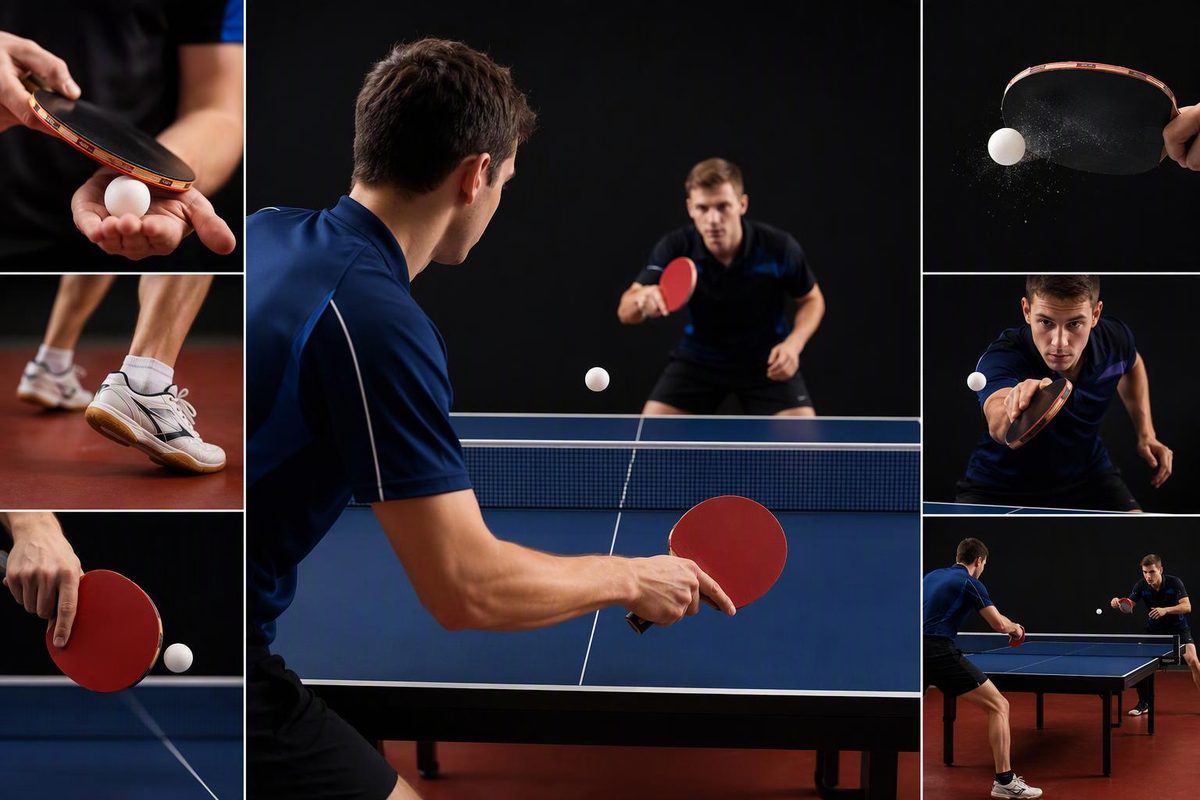
For a developing club player, useful priorities are controlled strokes and placement, footwork and recovery, a dependable spin serve, serve receive, and an opening topspin against backspin. Learn them as connected skills—not five separate tricks. This is a practical starting list, not a fixed ranking for every player.
Start with control if ordinary rallies still break down quickly. If you can rally comfortably, give more attention to whichever part of the serve–receive–attack sequence fails in your matches. For a systematic way to choose that priority, use the match-weakness training plan.
Five skills worth prioritising
1. Controlled strokes with deliberate placement
Build a forehand and backhand drive, a push against backspin, and a compact block against topspin. A push brushes underneath the ball to produce backspin; a block uses a short stroke to return an incoming attack. These are different responses, not interchangeable ways of keeping the ball on the table. Tom Lodziak’s coaching guide explains their roles.
Practise at a pace where you can aim. Choose a broad target—the opponent’s backhand half, for example—before adding speed.
Checkpoint: Can you land eight of ten suitable feeds in that half without stretching or changing your swing dramatically? Use this as a practice target, not a universal standard.
2. Footwork that leaves you ready for the next ball
Being able to hit from one position is only the beginning. Learn to move between forehand and backhand positions, finish balanced, and prepare again. PingSkills treats linking strokes through set patterns and footwork as a distinct step after learning individual strokes.
Start with two nearby positions rather than the widest corners. Keep your knees comfortably bent and use small lateral adjustments instead of reaching with your arm; the PingSkills footwork lesson emphasises a stable base before each shot.
Checkpoint: After each stroke, are you balanced enough to move either way? If not, narrow the feeding pattern or slow it down.
3. One reliable backspin serve
Begin with one serve you can place and repeat. Brushing underneath the ball generates backspin; learning that contact is more useful than collecting several service motions you cannot control. Lodziak’s serving guidance covers backspin contact.
Check your action against the legal serve checklist, then practise length and placement. For a short-serve target, let the ball travel untouched and check whether it bounces twice on the receiver’s side.
Checkpoint: Record how many of ten serves meet both your placement and length targets. Add sidespin and a disguised no-spin variation later with your first three spin serves.
4. Reading spin and length on receive
Receive is a decision skill as well as a stroke. Watch the server’s racket movement at contact, rather than relying only on the overall service motion. Lodziak’s receive guidance recommends watching the racket to identify the spin.
Length also changes your options. A short ball limits room for a full swing; a long ball gives you the opportunity to make a topspin attack. PingSkills explains this distinction in its lesson on judging serve length.
Start with known backspin: push the short serve and practise opening against the long one. Then ask your partner to vary length without announcing it. This first progression tests length judgment, not recognition of different spins.
Checkpoint: Track two things separately: whether you chose an appropriate stroke and whether the return landed. A correct choice with a missed contact needs different work from repeatedly choosing the wrong shot.
5. An opening topspin—and recovery after it
An opening topspin, often called a loop, starts your attack against backspin. PingSkills includes topspin against backspin among the fundamental stroke skills.
Begin against a predictable long push, using controlled pace and a broad target. Do not treat landing the opening as the end of the drill: recover and play the following block too. Use the forehand loop against backspin session for detailed mechanics.
Checkpoint: Can you open, recover, and land the next shot without rushing?
Connect the skills in a 30-minute partner session
Setup: One partner, a table, rackets and spare balls. Leave clear space for movement. Choose one wing for the opening attack and one broad placement target. For the recovery drill, agree where the following block will go—start with a nearby second position, not a wide corner. Split the server and receiver roles equally within each practice block.
These are suggested timings and practice measurements, not ability standards. Timings include brief resets and ball collection.
| Time | Action | What to check |
|---|---|---|
| 4 minutes | Warm up with controlled forehand and backhand rallies, then gentle lateral movement. | Finish balanced; keep the pace cooperative. |
| 6 minutes | Server announces short or long backspin. Receiver pushes short balls and attempts topspin against long balls. | Count correct choices separately from landed returns. |
| 8 minutes | Server serves short backspin. Receiver pushes long to the agreed wing. Server opens with topspin; receiver blocks to the agreed second position; server moves and plays one more shot. | Count completed open–recover–next-shot sequences. |
| 6 minutes | Server varies short and long backspin without announcing length. Play each point out. | Judge the actual ball rather than starting a rehearsed stroke early. |
| 6 minutes | Play unrestricted points, alternating server every two points. Keep the same placement intention when the ball allows it. | Note which skill breaks down once the return is unrestricted. |
The variable block matters: PingSkills recommends random drills to train reactions and decisions under less predictable conditions. Do not make every feed random immediately. If control collapses, return briefly to the known pattern.
If opening topspin is not yet dependable, use a controlled long push in the receive block and slow the dedicated opening feeds. Build the stroke rather than forcing an attack at match speed.
Training without a partner
Solo: Spend ten minutes on one legal backspin serve. Test three sets of ten, recording placement and whether the untouched ball bounces twice on the receiver’s side. Shadow your ready position after every serve. This checks placement and length—not how difficult the spin is for an opponent.
Robot: Use steady feeds for placement and two-position movement, or long backspin feeds for the opening stroke if your machine supports them. A predictable feed does not test reading a human server’s contact, so keep that task for your next partner session.
At the next practice, repeat the weakest checkpoint first. Progress from a known ball to a variable ball, then test the skill in points.